
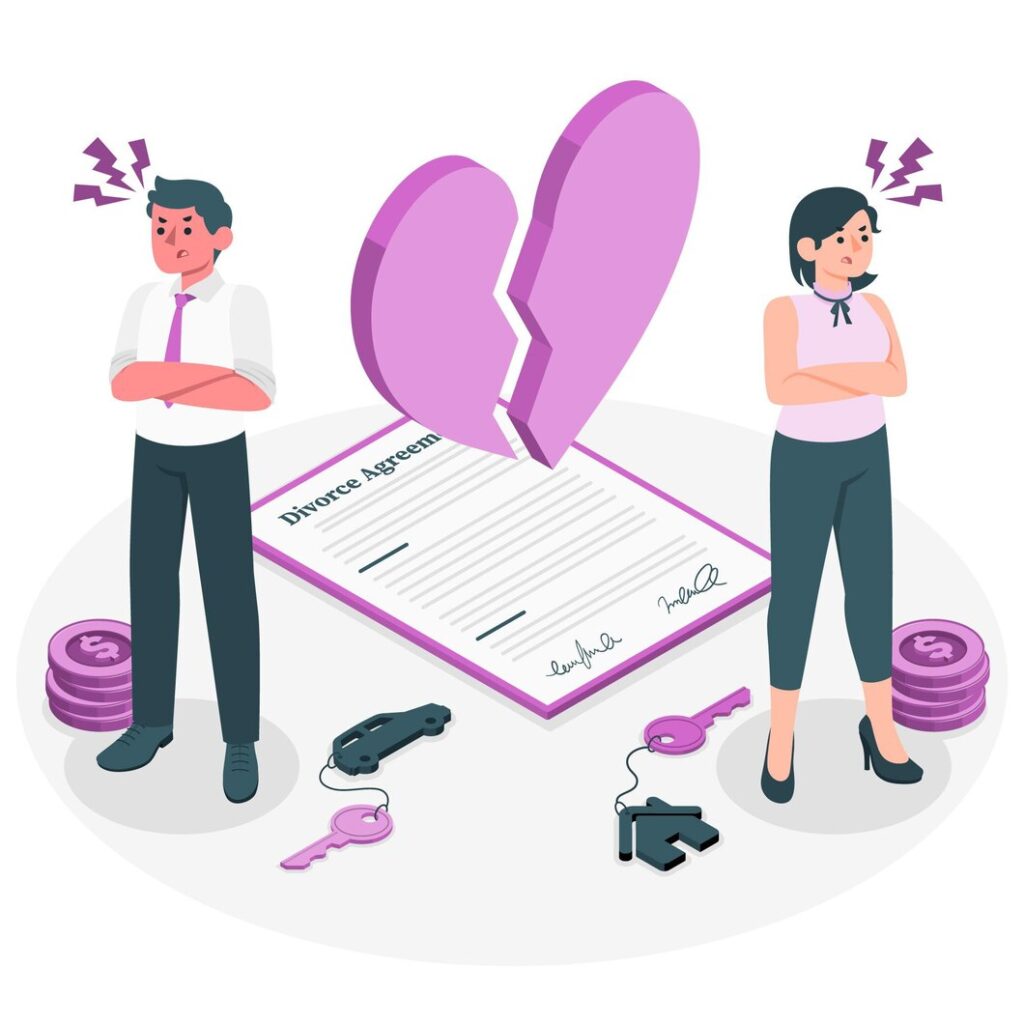

Suffering in silence should never be an option. Marriage is precious, but you should not feel obligated to stay if it makes you increasingly unhappy. Not all marriages are happy ones, and it is no secret that global divorce rates are increasing. If you find yourself struggling in your marriage, you should consider a divorce.
Divorce is the legal dissolution of a marriage. After a divorce, both individuals are legally single and are free to remarry.
There are many types of divorce that vary depending on your marital situation. They include:
Contested: This is when the spouses cannot reach an agreement on terms such as child custody or financial settlements. This often requires court intervention resulting in this type of divorce taking longer.
Fault: This is when one spouse blames the other for the marriage breaking down. Reasons can include adultery, abuse and abandonment. Evidence must be provided to support the claims making the case more complex.
No-Fault: This is the most common form of divorce where neither spouse has to prove the other is at fault for the marriage breaking down. As there is no one to blame, the proceedings can be more straightforward.
Uncontested: This is when both spouses agree on all issues. As there are no disagreements, this type of divorce is quicker and less expensive.
Litigated: This involves taking the case to court where a judge will decide the terms of the divorce.
Collaborative: This is where both spouses hire their own lawyers and work together to come to an agreement. The aim is to avoid litigation.
Mediated: The couple works with a mediator, a neutral third party, to come to an agreement on terms. The mediator cannot make decisions for the couple but helps to facilitate communication. This is generally cheaper and less stressful than a contested divorce.
Default: One spouse files for divorce while the other fails to respond or appear in court. The absent spouse cannot contest the terms which can lead to them receiving less favourable terms.
Summary: This is a simplified process for short-term marriages with no children who both agree on terms. It is a faster and cheaper option.
Annulment: This is a legal procedure to declare the marriage void. It is for cases where the marriage was legally invalid from the start. Grounds for annulment can include fraud, and the inability to consummate the marriage.
Legal Separation: This is an arrangement where the couple lives apart and works out the legal terms before ending the marriage. It can also be a temporary arrangement for couples that do not want a divorce but prefer to live separately.
Asset Division
This refers to the division of financial assets and property acquired during the marriage between the couple. It is one of the most contested parts of a divorce. The main ways the property is divided include:
• Community Property: This means the property is considered to be jointly owned by both spouses and is divided equally. Even if one spouse earned or contributed more, the property is split 50/50.
• Equitable Distribution: This means the property is divided fairly but not necessarily equally.
The court considers factors including the length of the marriage, the standard of living during the marriage and the financial contributions of each spouse.
Alimony
Alimony is the court-ordered payment made from one spouse to the other after a divorce. It is made to provide financial support to the lower-earning spouse to help them maintain their standard of living after the divorce. Alimony is influenced by:
• The length of marriage.
• The financial situation of both spouses.
• The health status of both spouses.
Alimony can be temporary or permanent. Not keeping up with alimony payments can result in legal consequences.
Child Custody and Support
Divorce law covers child custody and support. Child custody refers to the legal responsibility of a child. Custody can be joint where both parents share responsibilities or sole where one parent has primary responsibility.
There are two types of child custody:
• Physical Custody: Who the child lives with.
• Legal Custody: Who takes control of the child’s upbringing.
Child support refers to the financial assistance one parent must pay the other to cover their child’s needs. The parent without primary custody is the one who is required to pay this.
You should always seek out legal advice before proceeding with a divorce. Lawhaven Solicitors provides professional legal advice and offers litigation services should you need them.
Your first consultation is free!